Summer Memorials is proud to welcome Graveside Memorials to our family, continuing trusted care for Saskatoon families.Visit us at our new office at 202 33rd St E, Saskatoon, SK S7K 0S3.
July 9, 2026
Choosing a flat grave marker often feels straightforward at first. Families usually focus on the inscription, granite colour, or overall design. Then the cemetery approval process begins, and unexpected rules suddenly become part of the conversation.
Many Canadian cemeteries have strict requirements involving marker dimensions, granite thickness, engraving methods, and installation standards. Missing even one detail can delay approvals or require costly revisions later.
That is why many families work with experienced monument professionals before making final decisions. A properly planned memorial helps avoid unnecessary complications while ensuring the marker remains beautiful and legible for generations.
Families exploring professional flat grave marker options often benefit from guidance before production even begins.
Every cemetery operates differently. Some maintain strict visual consistency across sections, while others focus heavily on installation requirements and long-term maintenance standards.
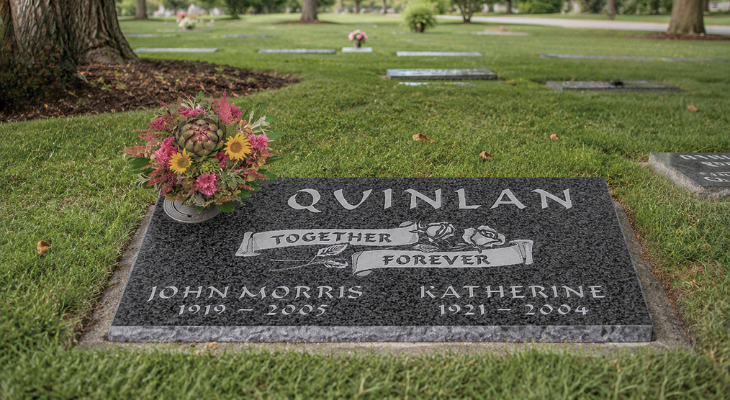
In Canada, cemetery regulations may affect:
Many families are surprised to learn that a design approved in one cemetery may not qualify in another nearby cemetery.
Professional monument companies help simplify this process because they understand how local cemetery requirements influence monument planning from the beginning.
One of the most overlooked cemetery rules involves marker size restrictions.
Most cemeteries regulate the exact dimensions permitted within specific sections. Width, height, and granite thickness may all require approval before production begins.
Some families mistakenly order a marker online without verifying cemetery standards first. This can create serious issues once the cemetery reviews the monument specifications.
A quality granite marker should generally use a minimum thickness of three inches for long-term durability and structural stability. Proper thickness also supports better engraving performance over time.
The Government of Canada recognizes the importance of preserving cemetery heritage and memorial integrity through proper care and standards in historic burial spaces. Historic places and cemetery conservation guidance.
Working with a professional cemetery monument company often helps families avoid these preventable approval problems.
Granite colour selection involves more than personal preference.
Certain cemeteries maintain appearance guidelines designed to preserve consistency throughout the property. This may influence what granite colours are permitted in particular sections.
Popular options include:
Granite colour also affects engraving visibility.
Dark granites such as Supreme Black or Britz Blue often work best with shallow sunk engraving methods because they create strong contrast without excessive shadowing.
Lighter granites like Mountain Rose or Mahogany typically require deeper cut lettering to create natural shadow contrast within the engraving itself.
Choosing the correct engraving method matters because long-term readability depends heavily on proper contrast.
Many families assume engraving styles are purely decorative. In reality, cemetery professionals and monument craftsmen often select engraving techniques based on granite performance and visibility.
Poor contrast can reduce readability over time.
Dark lettering against dark granite creates visibility challenges. Excessively deep engraving on dark granite may actually weaken contrast instead of improving it.
This is why professional monument providers evaluate:
before recommending an engraving style.
The Canadian Conservation Institute discusses the importance of proper stone preservation and maintenance methods for monuments and engraved surfaces. Stone conservation guidance for historic memorials.
When completed correctly, granite engraving can remain legible for generations, even if surface hilite colouring naturally fades over time.
Many online monument sellers focus only on shipping the marker itself. Installation responsibilities are often left entirely to the family.
That creates unexpected challenges.
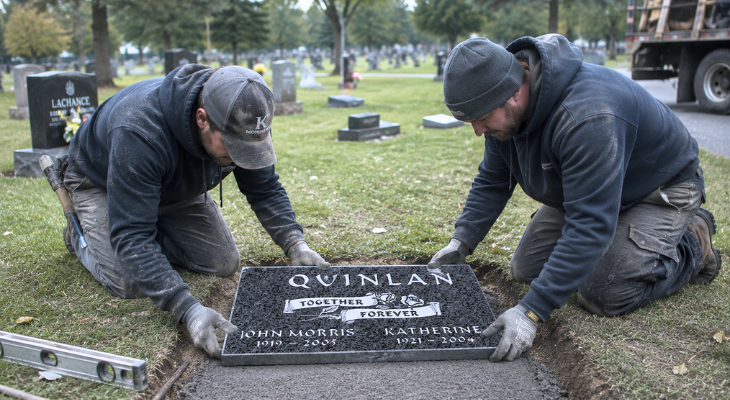
Professional installation involves much more than placing a marker on the ground. Proper installation may include:
Improper installation can eventually affect appearance and stability.
Over time, some monuments may require levelling adjustments or foundation updates due to natural ground movement. That does not mean the granite itself is failing. Properly manufactured granite remains highly durable in Canadian climates.
Families often overlook this difference when comparing monument providers online.
Professional installation services help ensure long-term presentation standards remain consistent with cemetery expectations.
Many cemeteries maintain strict layout standards throughout their grounds.
This may include regulations involving:
These standards help cemeteries preserve visual organization and maintenance accessibility.
Families sometimes finalize designs before confirming placement requirements with cemetery administrators. That can create approval delays later in the process.
Experienced monument providers usually coordinate with cemeteries during planning stages to reduce these complications before production begins.
Some families wish to personalize flat grave markers with additional decorative elements.
However, certain cemeteries regulate:
Restrictions often depend on maintenance standards and section consistency.
Professional monument companies typically review these limitations before finalizing production drawings.
This planning process helps avoid redesigns later while still creating highly personalized memorials that comply with cemetery expectations.
The Province of Alberta outlines standards connected to cemetery operations and maintenance responsibilities through provincial cemetery legislation.
Another commonly overlooked issue involves cemetery approval timing.
Many families assume production can begin immediately after selecting a design. In reality, cemetery authorization often happens before manufacturing starts.
Approval timelines may vary depending on:
Professional monument companies help streamline this process because they understand how cemetery approvals typically work.
Early planning often reduces delays and helps families avoid unnecessary scheduling complications during emotionally difficult periods.
Ordering a flat grave marker involves more technical detail than many families initially expect.
An experienced monument company helps guide families through:
Summit Memorials works closely with families to help ensure memorials meet cemetery requirements while maintaining high standards for craftsmanship, engraving legibility, and professional installation.
Families researching professional cemetery marker installation services often benefit from working with experienced providers familiar with Canadian cemetery expectations and monument standards.
Flat grave markers may appear simple, but cemetery regulations often influence far more than families expect.
Dimensions, granite colour, engraving style, installation standards, and cemetery approval timelines all play an important role in creating a memorial that meets both personal expectations and cemetery requirements.
Careful planning helps prevent unnecessary delays while protecting the long-term appearance and readability of the memorial itself.
Working with experienced monument professionals can make the process far more manageable while helping families create respectful, lasting tributes built to endure for generations.
Summit Memorials provides custom granite memorials, upright monuments, pillow markers, flat grave markers, restoration services, and professional monument installation for families across Canada. The company focuses on long-term craftsmanship, engraving quality, and cemetery-compliant memorial solutions designed for lasting legibility and durability.
Families searching for custom granite memorial solutions can rely on experienced guidance throughout the design and approval process. For cemetery monument planning assistance or installation information, contact us directly for current specifications and availability.