Summer Memorials is proud to welcome Graveside Memorials to our family, continuing trusted care for Saskatoon families.Visit us at our new office at 202 33rd St E, Saskatoon, SK S7K 0S3.
June 12, 2026
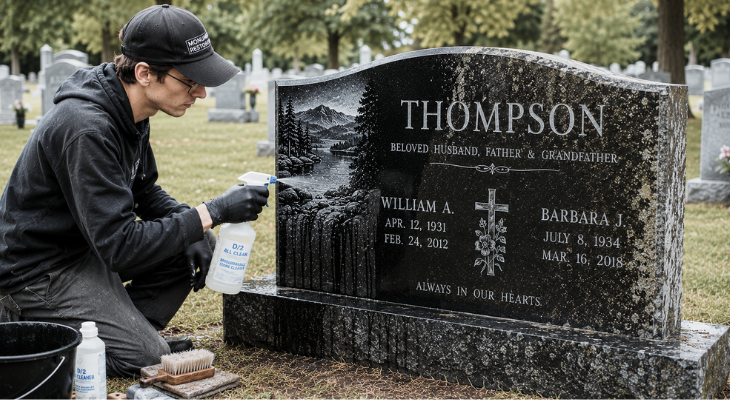
Grave markers are built to last, but they still require care over time. Exposure to weather, soil movement, and natural aging can affect their appearance and stability. Families often reach a point where they must decide between restoring the existing marker or replacing it entirely.
This decision is not always straightforward. It depends on the condition of the monument, cemetery requirements, and long-term expectations. At Summit Memorials, our team evaluates each monument carefully to recommend the most appropriate solution for long-term durability and compliance.
If you are considering professional grave marker restoration services, understanding both options will help you choose the right path with confidence.
Before choosing between restoration and replacement, it is important to understand what affects grave markers.
Granite is extremely durable. It does not crack from freeze-thaw cycles and does not deteriorate over time. However, external factors still impact the overall condition.
Soil movement can cause markers to shift or sink. Surface buildup from dirt and organic material can reduce visibility. Lithochrome may fade over time, even though the engraving remains intact.
The Government of Canada confirms that cemeteries and funerary services are regulated at the provincial and territorial level. This means local rules can also influence how monuments are maintained and repaired.
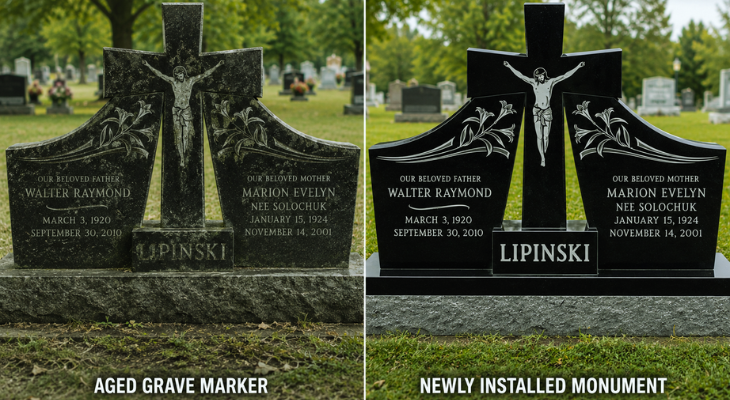
Restoration focuses on improving the condition of the existing monument without replacing it. It is often the preferred option when the structure remains intact.
Professional restoration involves more than simple cleaning. Our expert team at Summit Memorials helps design a detailed process to protect and extend the life of the monument.
Services typically include:
Each step is completed using methods that preserve the integrity of the stone.
Restoration is ideal when the monument is still structurally sound. Granite’s durability allows it to last for generations when properly maintained.
If the engraving is still readable, restoration can restore its appearance effectively. Even when lithochrome fades, the engraving itself remains legible if it was manufactured correctly.
Restoration also preserves the original design. This is important for families who value continuity and historical accuracy.
Replacement involves creating a new marker when restoration is no longer sufficient. This option is typically chosen when structural damage is present or when compliance issues arise.
Replacement becomes necessary in specific situations:
In these cases, restoration may not provide a long-term solution.
Replacement begins with design selection. Families choose the style, size, and granite colour that meets cemetery requirements.
Summit Memorials works with approved granite colours such as Blue Pearl, Supreme Black, and Mountain Rose. Each colour requires a specific engraving approach.
Dark granites use shallow sunk engraving for contrast. Light granites require deep cut engraving to create shadow and visibility.
After design approval, the new monument is produced and professionally installed. Installation includes proper foundation preparation and levelling.
Choosing between restoration and replacement requires understanding key differences.
Restoration is generally more cost-effective. It involves less material and shorter labour time.
Replacement requires new materials, engraving, and installation. This increases the overall cost. Always confirm pricing directly with the company for accurate estimates.
Restoration can often be completed faster. Many projects are finished within a shorter timeframe.
Replacement takes longer due to design, production, and installation steps.
Restoration preserves the original monument. It maintains historical and emotional value.
Replacement creates a new memorial. It offers an updated design and structure but replaces the original piece.
Restoration requires a stable stone. If the granite remains intact, restoration is effective. Replacement is necessary when structural damage affects safety or durability.
Making the right decision requires a careful evaluation of several factors.
Surface issues such as dirt, staining, or faded lithochrome are good candidates for restoration. Structural issues such as cracks or missing sections usually require replacement.
Each cemetery has its own rules for monument condition and installation. These rules can affect both restoration and replacement decisions. It is important to confirm requirements before proceeding.
Restoration extends the life of the existing monument. It is ideal for preserving original craftsmanship.
Replacement provides a fresh start. It ensures long-term stability when damage is severe.
The National Research Council Canada states that durability depends on proper material selection and installation. This applies to both restoration and replacement decisions.
Professional restoration protects the monument from further damage. Incorrect methods can permanently harm granite surfaces.
Experts use techniques designed specifically for cemetery markers. This ensures cleaning and repairs are safe and effective.
Professional services also address underlying issues such as levelling and stability. This prevents recurring problems.
Working with experienced professionals ensures the monument meets cemetery standards and maintains its appearance.
Installation is one of the most important parts of replacement. A poorly installed monument can shift, sink, or become unstable.
Professional installation includes proper base preparation and alignment. This ensures long-term performance.
Proper construction practices help ensure long-term performance and safety. This reinforces the need for expert installation.
Unlike many online sellers, Summit Memorials provides professional installation services. This eliminates the burden on families and ensures proper results.
Many families try to clean markers themselves. This often leads to damage or reduced legibility.
Another mistake is replacing a marker too early. Restoration may be sufficient in many cases.
Ignoring early signs of shifting can also lead to larger issues. Addressing problems early helps reduce long-term costs.
Choosing unverified suppliers is another risk. Quality materials and proper installation are essential for durability.
Restoration and replacement both serve important purposes. The right choice depends on the condition, regulations, and long-term goals.
Restoration is the best option when the granite remains intact. It preserves history and extends the life of the monument.
Replacement becomes necessary when damage affects safety or compliance. A new monument ensures stability and durability.
A professional evaluation helps determine the most practical and cost-effective solution.
At Summit Memorials, we specialize in custom headstones, monuments, and cemetery services across Canada. We focus on quality craftsmanship, long-term durability, and proper installation for every project we complete.
We design each monument with attention to detail, ensuring it meets cemetery requirements and maintains lasting legibility. Our team also provides professional restoration services to help preserve existing memorials while maintaining their original integrity.
To explore your options, visit our professional headstone and monument services or contact us to speak with our team.